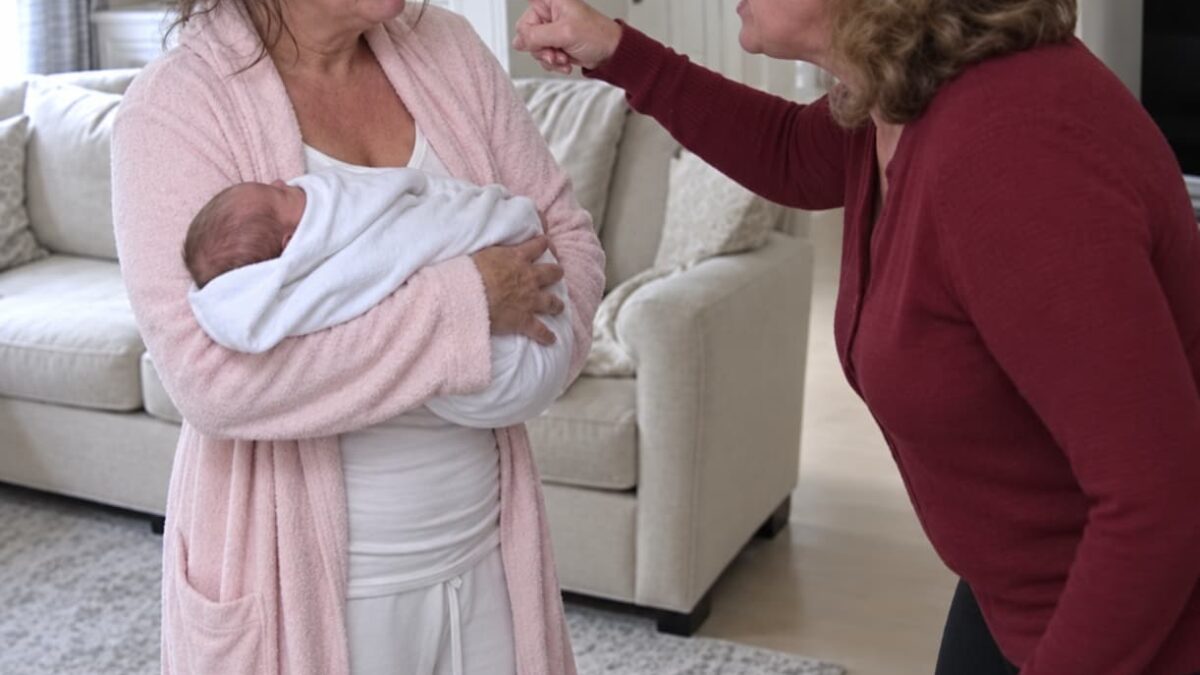
I gave birth to my daughter completely alone on a gray Thursday afternoon at Hawthorne Military Medical Center.
Fourteen hours of labor.
No husband holding my hand.
No mother brushing the hair from my forehead.
No sister waiting outside the delivery room.
Just nurses changing shifts beneath fluorescent lights and the occasional sound of carts rolling through the hallway.
My husband, Ryan, was nearly a thousand miles away on a mandatory military training assignment. He had tried everything he could to get released early, but the request was denied.
So when our daughter finally entered the world, there was no dramatic family celebration.
There was only me.
And her.
“A girl,” the nurse said softly.
Then she placed that tiny, warm body against my chest.
I started crying before I even saw her face.
“Hi, Ava,” I whispered.
We had chosen the name months earlier.
Ryan wanted Grace.
I wanted Ava.
Eventually he smiled and said, “Fine. Ava Grace. But when she asks, tell her Dad won the middle-name battle.”
So Ava Grace she became.
For the first time in months, everything inside me became quiet.
Then I made the mistake of reaching for my phone.
There were congratulations from people in my unit.
A short message from my commanding officer.
And a shaky video Ryan had recorded.
His eyes were red.
“I’m sorry I’m not there,” he said. “Tell Ava her dad already loves her more than anything. And tell her I owe her mom the biggest apology on earth for missing today.”
I smiled through tears.
Then I opened my mother’s message.
It had arrived forty-three minutes after Ava was born.
Clara’s kids want new phones for their birthdays. Send me $2,000 tonight before the sale ends.
That was it.
No congratulations.
No How are you?
No How is the baby?
Nothing.
I read it twice.
Then I turned my phone facedown.
For the first time in my adult life, I didn’t answer my mother.
My older sister Clara had always needed rescuing.
At least, that was the story my family told.
Clara was four years older than me and had three children.
I loved those kids.
None of what happened was their fault.
But somewhere along the way, loving my nieces and nephew had become indistinguishable from financing their lives.
When Clara’s rent increased, I helped.
When her transmission failed, I sent $1,800.
When one child needed a laptop for school, I bought it.
When Christmas was “going to be ruined,” I paid for presents.
When the refrigerator died, I replaced it.
Then came dental bills.
Summer camps.
School clothes.
Utility bills.
Birthday parties.
A security deposit.
A vacation I was originally told was “for the children to heal after a difficult year.”
I had started sending money after receiving my first deployment bonus.
Back then, I was proud to help.
I was the stable daughter.
The responsible one.
The one with a career.
Clara was struggling.
My mother, Janet, had a phrase she loved:
“The strong one carries more.”
For years, I thought that was a compliment.
Eventually, I realized it was an assignment.
And nobody had ever asked whether I wanted it.
Two days after Ava was born, I went home.
Ryan still wasn’t back.
A friend from my unit drove me from the hospital and carried my bags inside.
My mother didn’t visit.
Neither did Clara.
But the messages continued.
Did you see my text?
Then:
The sale ends tomorrow.
Clara followed with:
The kids are counting on you.
When I didn’t answer, the tone changed.
Don’t punish children because you’re stressed.
Family shows up for each other.
And finally:
After everything we’ve been through, this is who you’ve become?
I stared at that last message while Ava slept against my chest.
Then I opened my banking app.
Not to send money.
To look.
For the first time, I went through years of transfers.
$300.
$850.
$1,200.
$2,400.
$600.
$1,950.
So many small rescues that I had forgotten most of them.
I downloaded the statements.
Later, when Ava slept long enough for me to sit at the kitchen table, I added everything.
The number made me feel sick.
Over five years, I had transferred or directly paid more than $37,000 for expenses connected to Clara and her children.
That didn’t include gifts.
It didn’t include plane tickets I’d purchased for my mother.
It didn’t include the months I’d quietly covered part of Janet’s insurance after my father died.
I closed the laptop.
Ava made a tiny sound from the bassinet.
I looked at her.
Thirty-seven thousand dollars.
That could become part of her education.
An emergency fund.
Childcare.
A future home.
Security.
For years, I had been treating my own future like the family emergency fund.
I wasn’t doing that to my daughter.
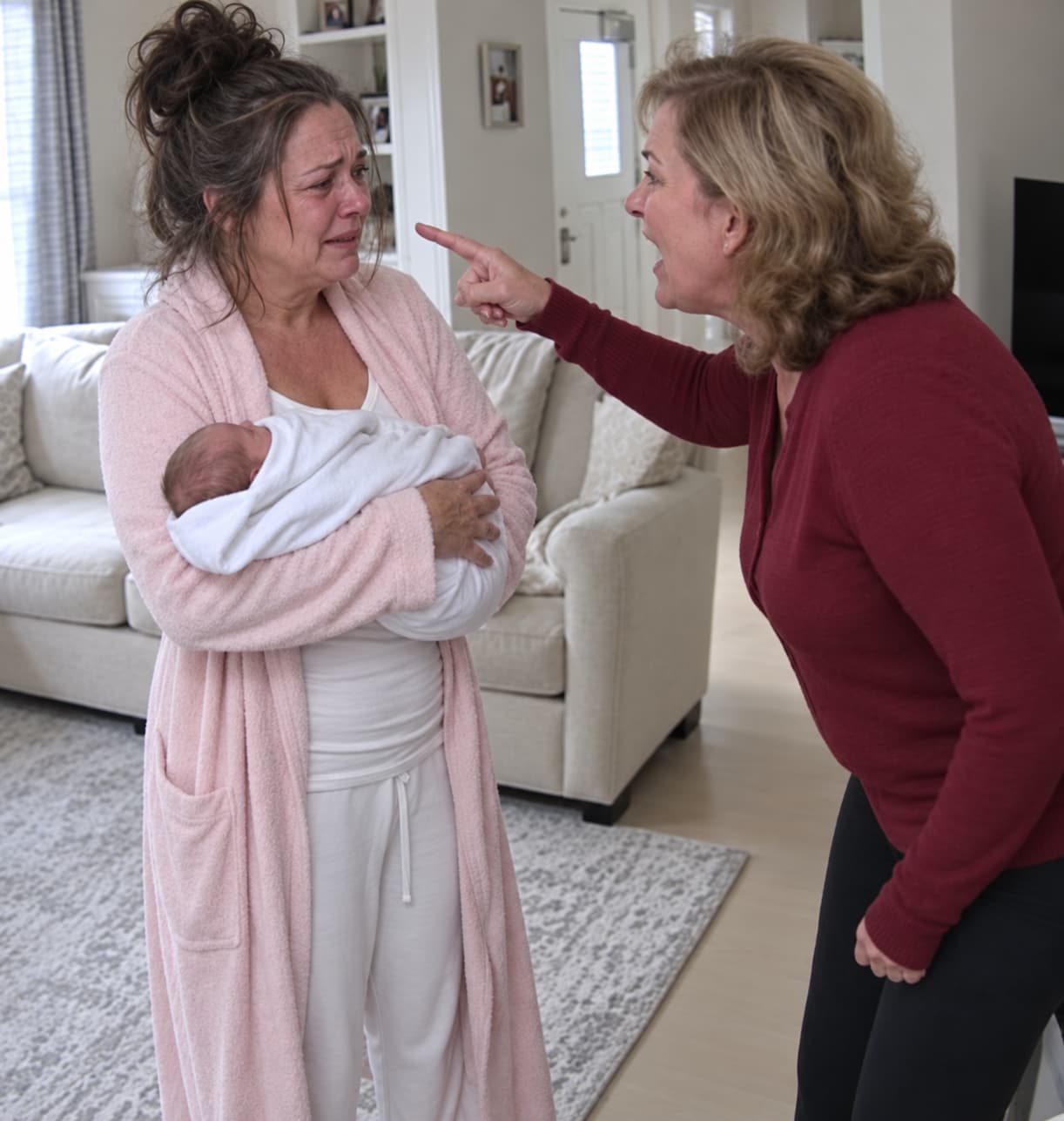
Exactly one week after Ava was born, my front door burst open.
My mother still had a spare key.
I was standing in the living room wearing sweatpants and one of Ryan’s old shirts. My body still hurt. I had slept perhaps three hours total the previous night.
Janet stormed inside.
“What is wrong with you?”
Ava startled awake.
She screamed.
Something inside me changed.
I picked her up immediately.
“Lower your voice.”
My mother stared at me.
“What?”
“You woke my baby. Lower your voice or leave.”
For a moment, she seemed genuinely stunned.
I had never spoken to her that way.
Not because she had earned gentleness.
Because I had spent thirty-three years being trained to keep the peace.
“Clara has been calling you for a week.”
“I know.”
“The children had birthdays.”
“I know.”
“They were expecting those phones.”
“Then Clara shouldn’t have promised them something she couldn’t afford.”
My mother’s mouth fell open.
“You have money.”
“Yes.”
“You have a stable career.”
“Yes.”
“So what’s the problem?”
I looked down at my seven-day-old daughter.
“The problem is that you think those things make my money yours.”
Janet’s expression hardened.
“The military changed you.”
“No. Becoming a mother did.”
She stepped closer.
“You’re abandoning your real family for discipline, structure and pride.”
“She’s my real family.”
I looked at Ava.
My mother laughed bitterly.
“She’s a baby. She doesn’t need two thousand dollars.”
I will remember that sentence forever.
Because suddenly everything became clear.
In my mother’s mind, money in my account did not belong to me until I spent it.
It remained available for whoever she believed deserved it more.
I tightened my arms around Ava.
“You need to leave.”
Then Janet stepped closer and lowered her voice.
“You really think your husband is going to protect you from us?”
I stared at her.
“Protect me from what?”
She realized too late what she had said.
“That’s not what I meant.”
“Then explain it.”
“I mean when Ryan comes back, he’ll understand that family has obligations.”
“You didn’t say understand. You said protect.”
She reached for her purse.
“Stop being dramatic.”
“No.”
I walked toward the door and opened it.
“Give me my spare key.”
“What?”
“My key.”
“I’m your mother.”
“And this is my home.”
She refused.
So I didn’t argue.
I simply said, “Fine.”
Then I closed the door behind her.
Twenty minutes later, I called a locksmith.
Ryan came home four days later.
I heard his truck before I saw him.
I was feeding Ava on the couch when the front door opened.
His duffel bag hit the floor.
For several seconds, he just stood there.
He had seen Ava on video.
He had watched me hold her through a phone screen.
But this was different.
“Oh my God,” he whispered.
I started crying.
So did he.
He washed his hands twice before touching her because he was terrified of bringing something home from training.
Then I placed Ava in his arms.
I watched a man who had spent years in uniform become completely helpless in front of a nine-pound baby.
“Hey,” he whispered.
Ava yawned.
Ryan looked at me.
“She knows me.”
“She knows you’re loud.”
He laughed.
Then he cried again.
That evening, after Ava fell asleep, I told him everything.
The $2,000 demand.
The messages.
My mother’s visit.
The spare key.
The $37,000.
Ryan didn’t interrupt.
When I finished, he asked one question.
“What do you want to do?”
Not What should we do?
Not What do you want me to do?
What do you want to do?
That mattered.
“I want it to stop.”
“Then it stops.”
“I don’t want you threatening anyone.”
“I won’t.”
“I don’t want this turning into some ridiculous war.”
“It won’t.”
“I just want boundaries.”
Ryan nodded.
“Then we’ll have boundaries.”
That was why I had married him.
The next morning, I sent one message to my mother and Clara.
It was short.
I will no longer provide routine financial support. I love you and the children, but my income is not a family account. Do not make purchases or promises expecting me to pay for them. Do not enter my home without permission. I will decide when and how I give gifts. This is not open for negotiation.
Clara called immediately.
I didn’t answer.
Then came fourteen messages.
The first six were angry.
The next four were guilt.
The last ones were panic.
One caught my attention.
Mom said you already agreed to cover the phones.
I hadn’t.
I called Clara.
“Who told you that?”
“Mom.”
“I never agreed.”
Silence.
“But she said you always pay for birthday stuff.”
“That isn’t agreement.”
Another silence.
Then Clara said something unexpected.
“I already bought them.”
“With what?”
“My credit card.”
I closed my eyes.
“Clara.”
“The kids picked them out.”
“And Mom told you I’d reimburse you?”
“Yes.”
There it was.
My mother wasn’t simply asking me to help.
She had been spending my money before asking.
My compliance had become so predictable that she treated my bank account like a line of credit.
“I didn’t authorize that.”
“What am I supposed to do?”
“Return them if you can’t afford them.”
“They already opened them.”
“Then you’re going to have to work something out.”
Clara started crying.
I felt the old reflex immediately.
Fix it.
Transfer the money.
Make the discomfort disappear.
Then Ava cried from the nursery.
That sound saved me.
“I have to go.”
“You’re really doing this?”
“Yes.”
“To your own sister?”
“No, Clara.”
I looked toward my daughter’s room.
“I’m finally not doing it to myself.”
For almost a month, my mother refused to speak to me.
Then I received a letter.
Not an apology.
A bill.
Janet had created a handwritten list of everything she claimed she had done for me since I turned eighteen.
A plane ticket home from college.
$600 she had contributed toward my first car.
Groceries during one summer.
A dress for a military ceremony.
At the bottom, she had written:
Family doesn’t keep score. But since you apparently do, maybe you should remember what you owe.
I laughed.
Then I cried.
Because the woman who had written family doesn’t keep score had literally mailed me a scorecard.
Ryan found me sitting at the kitchen table.
He read it.
“What are you going to do?”
“Nothing.”
And I meant it.
Two months later, things became more complicated.
My father had died eight years earlier.
Before his death, he had left a modest life-insurance policy that went to my mother.
I never questioned it.
But while organizing my own estate planning after Ava’s birth, I remembered something my father had once told me.
He had opened small custodial savings accounts for both daughters when we were children.
Mine wasn’t a fortune.
I vaguely remembered using some of it for college.
So I requested old records.
What I found didn’t expose some million-dollar conspiracy.
It was smaller than that.
And somehow more painful.
During my early twenties, when I was away training and later deployed, several withdrawals had been made from an account that had originated as mine.
The total was just under $9,000.
Some appeared to have been used for legitimate expenses I had known about.
Others I couldn’t identify.
I did not accuse anyone of theft.
I took the records to an attorney.
The attorney explained that old custodial accounts could be complicated, especially after so many years, and that the documents alone didn’t establish wrongdoing.
So I did something my family hated.
I asked questions.
My mother eventually admitted that some of the money had gone to Clara.
“She needed it more.”
“Did you ask me?”
“You were overseas.”
“You could have emailed me.”
“You would have said yes.”
“Then why didn’t you ask?”
She had no answer.
That was when I finally understood the pattern.
It had never really been about whether I would help.
It was about whether I was allowed to say no.
Clara and I didn’t speak for nearly four months.
Then, one Tuesday morning, she called.
I almost let it go to voicemail.
Instead, I answered.
“Hey.”
She sounded exhausted.
“Can we talk without Mom?”
That was new.
“Yes.”
We met at a coffee shop.
Clara looked different.
Not physically.
She looked uncomfortable in a way I’d rarely seen.
“I returned two of the phones,” she said.
I blinked.
“What?”
“The store let me return two. The oldest had damaged the packaging, so I’m paying that one off.”
“Okay.”
“I picked up extra shifts.”
I waited.
Then she started crying.
“I hate you a little.”
I almost smiled.
“That’s an interesting opening.”
“I know.”
She wiped her face.
“I hate you because when you stopped paying, I realized how much of my life was built around somebody eventually rescuing me.”
That surprised me.
“Clara—”
“Let me finish.”
So I did.
“Mom always said you had more because you were lucky.”
I laughed softly.
“I spent my twenties sleeping in barracks and missing holidays.”
“I know that now.”
She looked down.
“She made it sound like your money was just sitting there. Like asking you for two thousand dollars was nothing.”
“Sometimes it was nothing financially.”
Clara looked at me.
“But that isn’t the point.”
“No.”
“The point was nobody asked.”
I nodded.
For the first time in years, my sister understood.
Not perfectly.
But enough.
My relationship with my mother took much longer.
Janet refused to accept boundaries unless she was the one setting them.
She told relatives Ryan was controlling me.
That amused him more than it should have.
At Thanksgiving, one aunt pulled me aside and whispered:
“Is Ryan stopping you from helping your family?”
I answered:
“No. Ryan is the person who asked me what I wanted.”
That ended the conversation.
Eventually, Janet realized something else.
My boundary wasn’t temporary.
I wasn’t withholding money until she apologized.
I wasn’t bargaining.
I wasn’t punishing her.
The family ATM had simply closed.
Forever.
I still bought birthday gifts for my nieces and nephew.
I contributed to one genuine medical emergency after speaking directly with Clara.
When my nephew graduated, Ryan and I gave him a laptop.
But those were gifts.
Chosen freely.
Not invoices delivered by my mother.
There is an enormous difference.
Ava was eleven months old when Janet finally came to my house again.
She knocked.
That mattered.
I opened the door but didn’t immediately invite her inside.
She held a small stuffed rabbit.
“Can I see my granddaughter?”
I looked at her.
“If you can respect the rules.”
Her lips tightened.
A year earlier, that expression would have made me retreat.
Now I waited.
Finally, she nodded.
“Yes.”
I let her in.
She sat on the floor while Ava crawled toward the rabbit.
For almost twenty minutes, my mother said nothing about money.
Then she looked at me.
“I thought you were trying to punish me.”
“I wasn’t.”
“I know that now.”
She watched Ava.
“I think I got used to you being the easy one.”
That was probably the closest my mother had ever come to admitting what happened.
“The easy one?”
“The one who didn’t make things difficult.”
I smiled sadly.
“I was making things difficult for myself instead.”
She nodded.
“I know.”
“Mom, I would have helped Clara many of those times if you’d asked.”
“I know.”
“But you didn’t want help. You wanted access.”
She looked away.
For a moment, I thought the conversation was over.
Then she whispered:
“I suppose I did.”
I didn’t forgive everything that afternoon.
Healing isn’t a light switch.
But it was the first honest conversation we’d had in years.
Ava is five now.
She has Ryan’s eyes and my stubbornness.
Clara is doing better.
She eventually took a full-time administrative position with benefits. She still struggles sometimes, but she no longer sends me emergency messages every few weeks.
More importantly, she stopped promising her children things based on money she didn’t have.
Our relationship became something it had never really been before.
A relationship between sisters.
Not lender and borrower.
Not rescuer and rescued.
My mother and I still have boundaries.
She does not have a key to my house.
She never will again.
She occasionally slips into old habits.
Last Christmas she mentioned that Clara’s youngest “really wanted” an expensive gaming console.
I smiled.
“Then I hope he saves for one.”
Mom opened her mouth.
Then closed it.
Progress.
A few months ago, I found the screenshot of the text my mother sent the day Ava was born.
I had forgotten I saved it.
Clara’s kids want new phones for their birthdays. Send me $2,000 tonight before the sale ends.
For years, reading something like that would have made me angry.
This time, it didn’t.
I looked across the living room.
Ava was sitting on the carpet building a crooked castle.
Ryan was beside her, pretending not to understand where the roof belonged so she could dramatically correct him.
I thought about the woman lying alone in that military hospital five years earlier.
Exhausted.
Stitched.
Terrified.
Holding a newborn while wondering whether refusing a $2,000 demand somehow made her selfish.
I wish I could sit beside that version of myself.
I would tell her something I learned far too late.
Being capable does not mean you owe everyone your capacity.
Having money does not make other people’s wants your responsibility.
Being the strongest person in a family does not mean volunteering to be crushed beneath everyone else’s needs.
And saying no does not mean you stopped loving anyone.
Sometimes no is the word that finally makes love honest.
That afternoon in the hospital, I thought Ava’s birth had changed my life because I had become a mother.
I was right.
Just not in the way I expected.
She hadn’t been alive for an hour when my own mother asked me for money.
And looking at my daughter’s tiny face, I suddenly understood what I had failed to understand about myself for years.
I would never teach Ava that love meant surrendering her boundaries to keep other people comfortable.
So I had to stop teaching myself the same thing.
My mother once asked whether I really believed Ryan could protect me from my family.
The answer turned out to be no.
Ryan supported me.
He stood beside me.
He respected my decisions.
But he wasn’t the person who finally protected me.
I was.
And it started with the smallest thing I had ever done.
I received a demand for $2,000.
I turned my phone facedown.
And for the first time in my life—
I said nothing.